

US Auto Market 2026: EVs Face Headwinds Amid Inventory Surge
The year 2026 is proving to be a pivotal and complex period for the automobile electric car USA 2026 market, characterized by significant shifts in consumer behavior, evolving manufacturer strategies, and a dynamic regulatory landscape. What was once seen as an unstoppable surge towards electrification is now navigating a period of recalibration, marked by rising new-vehicle inventories, a notable slowdown in electric vehicle adoption, and strategic adjustments from some of the industry’s biggest players. This breaking news report delves into the current situation, offering a snapshot of the challenges and opportunities facing the automotive sector across the United States.
A Swelling Inventory and Shifting Market Dynamics
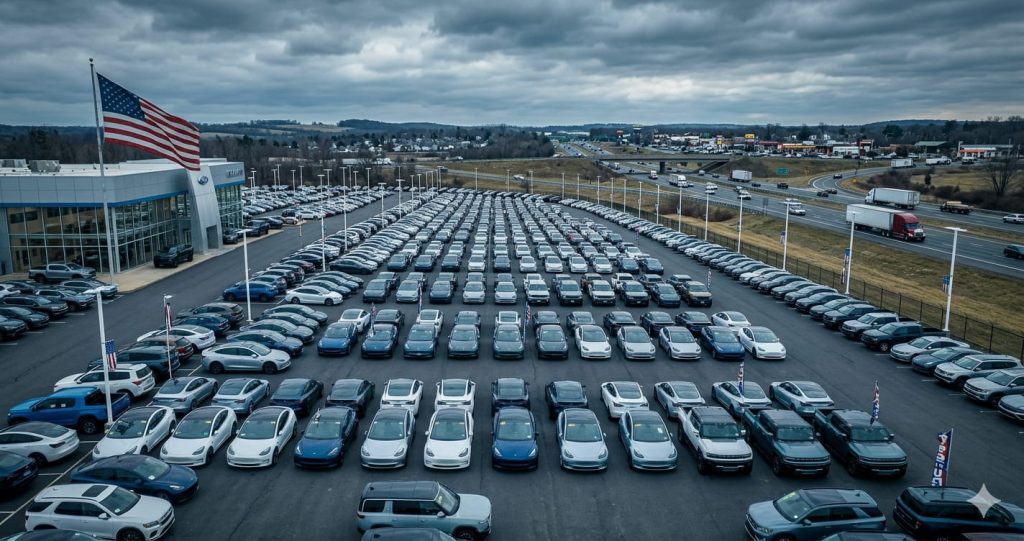
One of the most immediate and impactful developments in early 2026 is the substantial increase in new-vehicle inventory. According to recent reports, the total new-vehicle inventory has surged past the 3 million mark, pushing the average days’ supply to 75. This figure represents a significant increase, indicating that dealerships have more vehicles on their lots than at any point in recent memory, a stark contrast to the supply-constrained years of the pandemic. While a higher inventory can offer consumers more choice and potentially better deals, it also signals a potential slowdown in demand, prompting manufacturers and dealers to re-evaluate production levels and sales strategies.
The rise in inventory isn’t uniform across all segments, and its implications vary. For consumers, this could translate into a return to more competitive pricing, increased incentives, and greater negotiation power, a welcome change after years of inflated prices and limited availability. For automakers, however, it presents a challenge, potentially leading to increased holding costs and pressure to reduce production or offer deeper discounts to move units. This delicate balance between supply and demand is a critical indicator of the overall health of the U.S. automotive market in 2026.
EV Registrations Dip as Hybrids and Gas Vehicles Regain Traction
Perhaps the most striking development impacting the future of the automobile electric car USA 2026 market is the unexpected downturn in EV registrations. January 2026 saw a significant 41% drop in EV registrations, a clear signal that the market for battery-electric vehicles is experiencing a period of adjustment. This sharp decline comes as gas-powered vehicles and, notably, hybrid vehicles have regained market share in what is described as an ‘unsettled market’.
This shift suggests a multifaceted evolution in consumer preferences and market realities. While the long-term trajectory towards electrification remains, the immediate enthusiasm appears to be tempered by several factors. These may include persistent concerns about charging infrastructure availability and reliability, the initial higher purchase price of many EVs compared to their internal combustion engine (ICE) counterparts, and anxieties surrounding range limitations, especially in diverse geographical contexts across the USA. Furthermore, the resurgence of hybrids indicates that many American consumers are seeking a transitional technology that offers improved fuel efficiency without the perceived complexities or compromises of a fully electric vehicle. This market recalibration forces automakers to rethink their aggressive EV rollout plans and consider a more diversified portfolio.
Automaker Strategies in a Volatile Landscape
In response to these market dynamics, major automotive players are making significant strategic adjustments, reflecting a broader industry re-evaluation of the pace and pathway to electrification.
Chevrolet Bolt’s Brief Encore: A Strategic Revival for GM
General Motors’ decision to briefly revive the Chevrolet Bolt stands out as a fascinating tactical move. Known as the least expensive EV on the market, the Bolt is making a short-lived return, aimed at attracting new buyers into the electric vehicle segment. This revival is part of GM’s evolving EV strategy, which recognizes the importance of offering accessible entry points into the EV ecosystem, especially in a market where higher price points have been a barrier for many potential buyers. However, its return is explicitly expected to be short-lived, a testament to the rapidly changing policies and market dynamics that dictate EV product lifecycles.
The Bolt’s temporary comeback underscores a critical tension within the EV market: the balance between affordability and advanced technology. While GM is heavily investing in next-generation Ultium-based EVs, the Bolt offers an immediate, cost-effective option to maintain sales momentum and market presence at the lower end of the EV spectrum. This strategy allows GM to cater to different segments of the market simultaneously, acknowledging that not all consumers are ready or able to invest in premium EV offerings. However, its transient nature also highlights how quickly automakers must adapt their product lines to remain competitive and relevant in an industry undergoing rapid transformation.
Volkswagen’s Delayed Ambitions in the U.S.
Volkswagen Group, another global automotive giant, is facing its own set of challenges in the U.S. market. The company’s ambitious target of achieving a 10% U.S. market share has been further delayed. A primary factor complicating this strategy is the escalating issue of tariff complications. Tariffs, whether existing or threatened, introduce significant uncertainties into global supply chains and pricing structures, directly impacting an automaker’s ability to compete effectively on price and volume.
For Volkswagen, a multinational corporation with complex manufacturing and import operations, tariffs can inflate costs, reduce profit margins, and make it harder to position vehicles competitively against domestic or other international brands. This delay signals that the broader geopolitical and trade environment plays a substantial role in shaping individual company strategies and overall market penetration. The intricate web of international trade policies, therefore, becomes a crucial variable in the ongoing evolution of the automobile electric car USA 2026 landscape.
Renault Enhances Appeal with Extended-Range EV Option
In a proactive move to address one of the primary concerns of EV adoption—range anxiety—Renault has announced an extended-range option for its next-generation EV platform. This strategic enhancement aims to significantly boost the vehicle’s appeal to a broader consumer base. Range remains a critical determinant for many potential EV buyers, particularly in a country like the USA with its vast distances and varied charging infrastructure.
By offering an extended-range option, Renault is directly responding to market feedback and consumer demand for greater practicality and versatility from their electric vehicles. This development is particularly relevant in the context of declining EV registrations, as it demonstrates an automaker’s commitment to overcoming perceived limitations and making EVs a more viable and attractive option for everyday use and longer journeys. Such innovations are vital for sustaining growth in the EV segment and converting hesitant buyers into confident EV owners.
BMW Navigates Intensifying Competition and Rising Electrification Costs
For premium automakers like BMW, 2026 is shaping up to be a critical transition year. The German luxury brand is confronting a dual challenge: intensifying competition from Chinese automakers and the escalating costs associated with electrification. While the Chinese market is particularly competitive, the ripple effects are felt globally, including in the USA, as Chinese brands increasingly innovate and expand their global footprint, indirectly raising the bar for all players.
The costs of electrification are substantial, encompassing massive investments in research and development for battery technology, retooling manufacturing plants, developing charging infrastructure partnerships, and training a new workforce. For a luxury brand, these costs must be managed without compromising the premium experience or eroding profit margins. BMW’s situation highlights the immense financial pressures on all automakers committed to an EV future, especially those in the high-end segment where consumer expectations for performance, technology, and luxury are exceptionally high. Successfully navigating these challenges will be crucial for BMW to maintain its competitive edge in the evolving automobile electric car USA 2026 market.
Broader Industry Adjustments and Regulatory Oversight
Beyond individual manufacturer strategies, the wider automotive industry is undergoing significant adjustments, with regulatory bodies also stepping in to ensure fair practices.
Automakers Recalibrate EV Rollouts: Cancellations and Delays
Reflecting the current market uncertainties and the recent dip in EV registrations, 2026 is also witnessing a trend of automakers pulling back on some of their ambitious EV projects. Reports indicate a number of EVs have been canceled or delayed, signaling a period of recalibration across the industry. This strategic pause or adjustment is a pragmatic response to align production with actual demand and to refine product offerings based on real-world market feedback.
These cancellations and delays are not necessarily a retreat from electrification but rather a more measured approach. Automakers are likely using this time to optimize battery technologies, reduce production costs, enhance charging solutions, and develop vehicles that better meet consumer needs and price expectations. It underscores the dynamic and adaptive nature of the automobile industry, which must constantly balance innovation with market realities and financial viability.
The Rise of Chinese Automakers in North America (and US Implications)
While direct entry into the U.S. market for Chinese automakers remains complex due to trade policies and regulatory hurdles, the news that three Chinese automakers are pushing to enter Canada in 2026, with 15 more potentially following, is a significant development. This expansion into North America signals a growing global ambition from Chinese brands and could have indirect implications for the U.S. market.
Should Chinese automakers establish a strong foothold in Canada, it could create competitive pressures that influence pricing and feature sets in the broader North American market. It also highlights the rapid advancements in technology and design coming from China, challenging established players globally. While U.S. consumers may not see these brands on their lots immediately, their presence in a neighboring market could accelerate innovation and competition among existing players, ultimately benefiting consumers through more diverse and potentially more affordable options in the long run.
FTC Warns Dealerships on Price Transparency
In an effort to protect consumers and ensure fair business practices, the Federal Trade Commission (FTC) has issued a stern warning to 97 dealership groups. The FTC emphasized that advertised vehicle prices must include ‘all required fees’ and must not be misleading. The letters sent to these groups provided six examples of “illegal” dealership advertising practices, underscoring the agency’s commitment to transparency in vehicle sales.
This regulatory intervention is crucial for maintaining consumer trust in the new vehicle market. In a period of fluctuating prices, inventory levels, and evolving sales models (including online purchasing), clarity in pricing is paramount. The FTC’s action aims to prevent hidden fees and deceptive advertising, ensuring that consumers can make informed purchasing decisions without encountering unexpected costs at the point of sale. This move reinforces the importance of ethical conduct across the entire automotive retail sector, a vital component for a healthy and trustworthy automobile market in the USA for 2026.
Conclusion: A Market in Flux
The first quarter of 2026 paints a picture of an automobile electric car USA 2026 market that is undeniably in flux. From swelling inventories and a surprising dip in EV registrations to strategic recalibrations by major manufacturers and heightened regulatory scrutiny, the industry is navigating a complex and dynamic landscape. While the long-term vision for electrification remains, the immediate future is characterized by a more pragmatic approach, with an emphasis on affordability, range, and a diversified product portfolio that caters to evolving consumer preferences. The coming months will undoubtedly reveal further shifts as automakers adapt to these realities, consumers make their choices, and the regulatory environment continues to shape the road ahead for the U.S. automotive sector.
“