

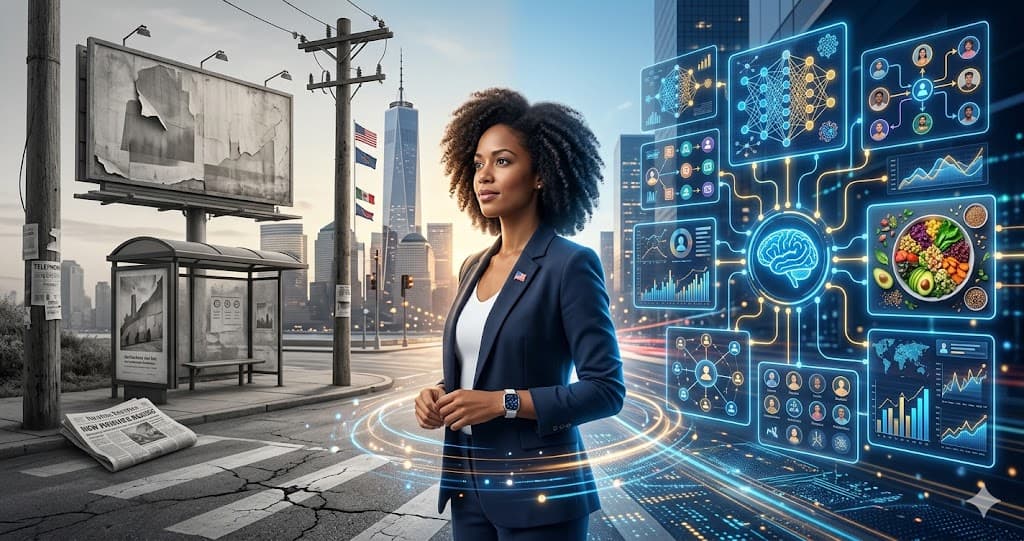
The landscape of digital marketing USA 2026 is undergoing a profound transformation, characterized by rapid technological advancements, evolving consumer behaviors, and significant regulatory shifts. From the strategic consolidation of media buying to the seismic impact of legal rulings on major platforms, brands and marketers in the United States are currently navigating a complex, dynamic environment. This period is defined by an urgent need for adaptability, innovation, and a keen understanding of the forces reshaping how businesses connect with their audiences. We’ll explore the breaking news and current realities defining this pivotal moment for digital marketing professionals across the nation.
NewFronts 2026: Unpacking the Latest Platform Innovations and Media Buyer Responses
The annual NewFronts, a crucial showcase for digital content and advertising opportunities, provided a stark look at the innovations currently captivating media buyers. As reported by Ad Age, the 2026 event highlighted significant platform pitches and the ongoing integration of artificial intelligence (AI) into core advertising tools. These presentations are not merely future projections; they represent the tools and strategies that are actively being deployed and evaluated by brands today.
AI at the Forefront: Google, Meta, and Beyond
Google, a perennial powerhouse in digital advertising, seized the NewFronts stage to demonstrate Gemini AI’s capabilities within its Display & Video 360 platform. This integration signals a significant shift towards more intelligent, automated campaign management, promising enhanced targeting, optimization, and creative generation. For marketers, the immediate implication is access to more sophisticated tools that can process vast datasets to deliver more personalized and effective ad experiences, thereby streamlining operations and potentially improving ROI.
Meta, not to be outdone, also revealed its latest advancements in automation and commerce hooks. With its vast ecosystem encompassing Instagram, Facebook, and WhatsApp, Meta’s focus on enabling seamless shopping experiences directly within its platforms is a direct response to evolving consumer purchasing habits. Brands are currently leveraging these tools to shorten the path to purchase, turning social engagement into tangible sales through integrated storefronts, live shopping features, and direct messaging commerce. This move reinforces the trend of social media platforms becoming increasingly central to the entire customer journey, from discovery to conversion.
Beyond the tech giants, the broader AI landscape continues to evolve at a blistering pace. While some AI tools, like OpenAI’s Sora, have struggled to gain traction with marketers, as highlighted by Ad Age, the industry is witnessing a rapid proliferation of rival AI solutions. These tools are being quickly adopted for various functions, including content creation, data analysis, predictive analytics, and personalized customer interactions. Marketers are currently experimenting with these diverse AI applications to gain a competitive edge, understanding that the right AI tool can significantly amplify their strategic efforts and operational efficiency.
The Rise of Connected TV (CTV) in Retail Media
Another compelling theme from NewFronts 2026 was the growing importance of Connected TV (CTV) as a powerful advertising channel, particularly for retail media. Walmart and Vizio, for instance, discussed the burgeoning opportunities for shopping on connected TVs. This trend represents a convergence of entertainment and commerce, allowing brands to deliver shoppable ads directly to consumers through their living room screens. The immediate impact for brands is the ability to reach engaged audiences with highly relevant product placements and calls to action, leveraging the immersive nature of television combined with the interactivity of digital platforms. This integration is particularly potent for retailers looking to close the loop between ad exposure and direct purchase, offering a compelling new frontier for performance marketing.
Strategic Realignment: Why Brands Are Consolidating Retail and Brand Media
A significant strategic shift currently underway in the digital marketing ecosystem is the consolidation of retail media and brand media under a single agency, a trend extensively covered by Ad Age. This move is not merely an operational adjustment but a fundamental re-evaluation of how brands manage their advertising investments and agency partnerships. Historically, these two facets of media buying often operated in silos, with separate teams and agencies managing brand-building campaigns and performance-driven retail promotions. However, the current environment demands a more unified approach.
Driving Efficiency and Integrated Strategy
Brands are increasingly recognizing the inefficiencies and missed opportunities inherent in fragmented media strategies. By consolidating retail and brand media with a single agency, they aim to achieve several critical objectives. Firstly, it fosters a more cohesive brand narrative across all touchpoints, ensuring that promotional messages align with broader brand values and identity. This eliminates potential inconsistencies that can arise when multiple agencies work independently, leading to a more streamlined and impactful brand presence.
Secondly, consolidation drives significant operational efficiencies. A single agency can leverage shared insights, data, and creative assets across both retail and brand campaigns, reducing redundancy and optimizing resource allocation. This integrated approach allows for a holistic view of the customer journey, enabling agencies to attribute sales more accurately and optimize spending across various channels. For brands, this translates into better budget utilization and a clearer understanding of marketing ROI, which is paramount in today’s cost-conscious environment.
Responding to Market Pressures
The push for consolidation also reflects broader market pressures, including the need for greater accountability and transparency in agency relationships. With shrinking fees and increased scrutiny on marketing expenditures, brands are demanding more from their agency partners. A single, integrated agency relationship can provide a clearer line of sight into performance, foster stronger collaboration, and ultimately deliver more strategic value. This current trend signifies a maturation of the agency model, moving towards more embedded and comprehensive partnerships that can navigate the complexities of modern digital marketing.
Influencer Marketing Under Scrutiny: The Landmark Ruling Against Meta and Google
Perhaps one of the most impactful developments currently shaping digital marketing in the USA is the landmark legal ruling against Meta and YouTube (owned by Google), as detailed by Vogue Business. This unprecedented verdict has sent ripples through the industry, particularly in the realm of influencer marketing and platform advertising, signaling a potential paradigm shift in how social media companies operate and how brands engage with their audiences.
Negligence and Its Implications for Platform Design
The Los Angeles jury found Meta and YouTube negligent in the design of their platforms, determining that this negligence was a substantial factor in causing harm to the plaintiff. This “first-of-its-kind case” is not just an isolated incident; it is expected to inform thousands of similar lawsuits being brought to courts across the U.S. While the verdict does not immediately mandate product changes, the sheer volume of potential litigation means that Meta and Google cannot ignore this decision. Both companies have stated their intention to appeal, but the legal precedent set is profound.
For brands and marketers, the implications are immediate and far-reaching. The ruling could fundamentally alter how social media companies build their algorithms. If platforms are compelled to prioritize user well-being over engagement metrics, it could lead to significant changes in content visibility, feed curation, and overall user experience. Brands currently rely heavily on these algorithms to distribute their marketing content, and any shift would necessitate a re-evaluation of their organic and paid social strategies. This might mean a move towards more quality-driven content and less reliance on viral, potentially harmful, trends.
Impact on Influencer Marketing and Ad Costs
The ruling casts a long shadow over influencer marketing, a channel that has seen a steady increase in brand investment over recent years. A 2025 study cited by Vogue Business found that 67% of surveyed teens felt insecure after viewing influencer content, highlighting the mental health concerns associated with this medium. Simultaneously, influencer marketing platform Creator IQ found that two-thirds of brands have been funding their increased influencer spend by cutting into paid media budgets. This indicates a significant reliance on influencers, making any disruption to this model particularly impactful.
Experts suggest that the reduced control brands often have over influencer outputs, coupled with the platforms’ potential liability, may cause brands to pull back from partnering with certain personalities or even reassess their overall influencer strategies. The risk associated with aligning with influencers whose content could be deemed harmful or whose practices could fall foul of new platform regulations might outweigh the benefits. Brands are currently evaluating their influencer vetting processes and considering more robust ethical guidelines for their campaigns.
Furthermore, the verdict could lead to increased ad costs on platforms like Instagram and YouTube. If platforms are forced to invest more in moderation, algorithm adjustments, or legal defenses, these costs may be passed on to advertisers. However, as one expert, Matz, suggests, increased costs might paradoxically lead to increased value. “The question is whether the returns go up,” Matz says. “Currently, the returns on social ads are really bad in terms of click-through and conversion rates. It could be that the returns actually go up, because we see fewer, so then it might still be worth paying that extra price.” This “less is more” philosophy suggests a future where higher-quality, more impactful ads command a premium, potentially leading to better engagement and conversion rates despite increased expenditure. Brands are currently weighing these potential cost-benefit shifts, preparing for a future where advertising on these platforms demands a more strategic and quality-focused approach.
Emerging Technologies and Innovative Commercial Strategies Taking Hold
Beyond the headline-grabbing shifts, brands in the USA are actively embracing a range of emerging technologies and innovative commercial strategies that are reshaping the daily realities of digital marketing. These developments, highlighted by Ad Age, underscore a continuous drive for efficiency, personalization, and new customer engagement models.
New Advertising Frontiers and AI-Powered Commerce
One notable development is Apple’s announcement that ads are coming to Maps. This opens up a significant new advertising frontier for local businesses and brands looking to target consumers based on their physical location and intent. For marketers, integrating location-based advertising into their strategies will become increasingly vital, offering hyper-targeted opportunities to reach customers as they navigate their immediate surroundings. This move by Apple signifies the continued expansion of ad inventory into previously untapped digital spaces, demanding a more comprehensive approach to media planning.
In the realm of retail, Gap’s launch of AI-assisted checkout illustrates the growing integration of artificial intelligence into the customer experience. This technology streamlines the purchasing process, reduces friction, and can even offer personalized recommendations based on past purchases and real-time inventory. For digital marketers, such advancements mean that the customer journey is becoming more seamless and data-rich, providing new opportunities for capturing valuable insights and optimizing conversion funnels. The emphasis is shifting towards creating frictionless, intelligent shopping experiences that blend online convenience with in-store efficiency.
Adapting to a Fast-Paced Tech Landscape
The rapid pace of technological innovation also means that brands and agencies must remain agile. The discontinuation of OpenAI’s Sora, despite its initial hype, serves as a reminder that not all emerging technologies will achieve widespread adoption or longevity. Marketers are currently navigating a landscape where tools and platforms can rise and fall quickly, necessitating a flexible approach to tech adoption and investment. The focus is on identifying technologies that offer genuine, sustainable value and can be integrated effectively into broader marketing strategies, rather than chasing every new trend.
These current developments highlight that digital marketing in the USA is not just about adopting new tools, but about strategically integrating them to create more compelling, efficient, and ethical campaigns. Brands are currently rethinking their technology stacks, agency partnerships, and legal compliance frameworks to stay ahead in this rapidly evolving environment.
Conclusion: Navigating the Complexities of Digital Marketing USA 2026
The current state of digital marketing in the USA in 2026 is one of dynamic flux and significant evolution. From the strategic realignments seen at NewFronts 2026, showcasing advanced AI integrations and the burgeoning potential of CTV, to the fundamental shifts in agency partnerships driven by consolidation, the industry is recalibrating at a rapid pace. The landmark legal ruling against Meta and Google, in particular, signals a pivotal moment, potentially redefining platform accountability, influencer marketing ethics, and the very economics of social media advertising.
Brands and marketers are currently faced with the imperative to adapt to these concurrent shifts. Success in this environment hinges on a proactive approach to understanding the implications of AI advancements, re-evaluating media buying strategies, navigating complex legal and ethical landscapes, and embracing innovative commercial technologies. The digital marketing ecosystem in the U.S. is not merely changing; it is being fundamentally reshaped, demanding agility, foresight, and a commitment to strategic innovation from all players.