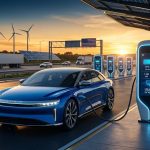


The United States automotive market in 2026 presents a complex landscape for prospective buyers. With projections indicating a notable downturn in overall sales, understanding the underlying factors and strategic approaches is crucial. For anyone considering purchasing an automobile electric car USA 2026 or any other vehicle, this guide will provide actionable insights to navigate the evolving market, ensuring you make an informed and advantageous decision amidst economic shifts and changing consumer preferences.
According to recent data from Cox Automotive, the US auto sales market is projected to experience a 2.6% drop in 2026. The first quarter of the year has already seen a significant 6.5% decline compared to the same period in 2025, a trend that underscores the challenges facing the industry. High costs of ownership, the specter of geopolitical tensions such as a potential war in Iran, and volatile oil prices are collectively clouding the future outlook for the auto market. These macro-economic forces translate directly into consumer considerations, from fuel efficiency to vehicle affordability, making strategic planning more important than ever.
Understanding the Shifting Sands of the 2026 US Auto Market
The automotive industry is a bellwether for the broader economy, and 2026 is proving to be a year of significant recalibration. Cox Automotive’s Industry Insights and Forecast highlights a projected 15.8 million new vehicle sales this year, a figure tempered by a challenging first quarter. The 6.5% decline in Q1 2026 sales compared to Q1 2025 indicates a significant cooling in demand, affecting major players across the board.
Notably, the Detroit Three automakers—General Motors, Ford, and Stellantis (parent company of Chrysler and Fiat)—are facing particularly steep declines. General Motors saw a 9.6% sales hit compared to Q1 2025, while Ford was down 9.3%. Stellantis, despite having posted extra-slow sales in the previous year, still recorded a 1.9% drop for Q1 2026 year-over-year, and a more significant 13.2% decline compared to the fourth quarter of 2025. Brands like GM’s Cadillac and Buick experienced particularly weak sales in the first quarter, signaling potential opportunities for savvy buyers.
The "K-Shaped" Economy and Its Impact on Vehicle Segments
Economists frequently refer to a "K-shaped" economy, where different segments of the population experience divergent economic fortunes. This phenomenon is clearly reflected in the 2026 US auto market. While overall sales are down, specific segments catering to more affluent buyers continue to thrive:
- Midsize SUVs: With an average price of $52,100, sales are up more than 15% so far this year.
- Midsize Trucks: Averaging $45,200, these vehicles have seen sales increases of about 14%.
- Luxury Compact SUVs: Priced around $53,900, this segment is up 5%.
- Midsize Cars: At an average price of $35,200, this segment saw a modest increase of a couple of points, but its market share continues to be challenged as automakers like the Detroit Three have reduced their offerings.
This trend suggests that consumers with higher disposable incomes are still investing in premium and versatile vehicles, while the broader market faces headwinds. For the average consumer, this means carefully evaluating needs against the backdrop of rising costs and a tightening market.
Navigating Your Vehicle Choices: EVs, Hybrids, and Traditional Powerhouses
The choice of powertrain is one of the most critical decisions for an automobile buyer in 2026, especially given the market’s current dynamics.
The Electric Car Conundrum: Is 2026 the Right Time for an EV?
The push for electric vehicles (EVs) has been strong, but the latest data indicates a shift: "EVs losing ground to hybrids." While the vision for an automobile electric car USA 2026 future remains, immediate consumer behavior suggests a pause. Several factors contribute to this trend:
- High Initial Cost: Despite potential long-term fuel savings, the upfront purchase price of many EVs remains higher than comparable gasoline-powered or hybrid models.
- Range Anxiety and Charging Infrastructure: Concerns about battery range and the availability, reliability, and speed of public charging stations continue to deter some buyers, particularly in less densely populated areas.
- Charging at Home: The cost and logistical considerations of installing a Level 2 home charger can be an additional barrier.
- Fluctuating Electricity Prices: While generally more stable than gasoline, the cost of electricity can still vary, impacting the perceived savings.
For consumers considering an EV in 2026, it’s essential to:
- Evaluate Your Driving Habits: Does your daily commute fit within the typical range of an EV? Do you have convenient home charging?
- Research Incentives: Federal, state, and local incentives for EV purchases or charger installations can significantly offset costs. Ensure you understand eligibility requirements and caps.
- Consider Battery Warranty and Longevity: Understand the manufacturer’s battery warranty and projected lifespan.
- Assess Resale Value: While still evolving, the used EV market is maturing, and understanding potential depreciation is important.
The Resurgence of Hybrids: A Balanced Choice for 2026
As EVs face challenges, hybrids are enjoying a resurgence in popularity. This category offers a compelling middle ground for many buyers in 2026, particularly with oil prices above $100 per barrel:
- Superior Fuel Efficiency: Hybrids combine gasoline engines with electric motors, offering significantly better MPG than traditional gasoline cars, directly addressing concerns about high fuel costs.
- No Range Anxiety: They operate like traditional cars, with gasoline as a backup, eliminating concerns about charging infrastructure.
- Lower Upfront Cost: Many hybrid models are more affordable than their pure EV counterparts, making them a more accessible option.
- Proven Technology: Hybrid systems have been refined over decades, offering reliability and lower perceived risk.
Consumers should explore various hybrid types – mild hybrids, full hybrids, and plug-in hybrids (PHEVs) – to find the best fit for their needs. PHEVs, for instance, offer a limited electric-only range for daily commutes and revert to hybrid mode for longer trips, providing the best of both worlds without heavy reliance on public charging.
Decoding Popular Segments and Their Price Tags
Beyond the powertrain, the vehicle segment itself impacts cost and suitability. As noted, the "K-shaped" economy favors higher-priced segments:
- Midsize SUVs ($52,100 average price): These versatile vehicles remain popular for families and those seeking space and utility. While expensive, the competition in this segment can sometimes lead to deals.
- Midsize Trucks ($45,200 average price): Offering utility and increasing sophistication, midsize trucks continue to attract buyers. Their higher demand might mean fewer aggressive discounts.
- Luxury Compact SUVs ($53,900 average price): For those prioritizing comfort, technology, and brand prestige, this segment offers premium features but comes with a higher price tag.
- Midsize Cars ($35,200 average price): While seeing modest growth, traditional sedans offer a more budget-friendly option. With the Detroit Three scaling back their offerings, remaining models might be more competitive or offer unique value propositions.
When considering these segments, evaluate not just the average price but also the total cost of ownership, including insurance, maintenance, and fuel. Don’t be swayed solely by trends; choose the vehicle that genuinely aligns with your lifestyle and financial comfort.
Strategic Buying in a Challenging Market: Your Consumer Playbook
With a projected sales drop and fluctuating economic conditions, 2026 calls for a strategic approach to car buying. Here’s a playbook to empower consumers:
Mastering Your Budget and Financing
Before you even step into a dealership, a robust financial plan is essential. High vehicle costs mean you need to be meticulous:
- Comprehensive Budgeting: Factor in not just the sticker price, but also sales tax, registration fees, insurance premiums, maintenance costs, and long-term fuel or electricity expenses.
- Understand Interest Rates: Market conditions can influence loan rates. Get pre-approved for a loan from your bank or credit union to establish a baseline and potentially leverage it for better rates at the dealership.
- Consider Total Cost of Ownership (TCO): Look beyond the monthly payment. A cheaper car with poor fuel economy or high maintenance costs might be more expensive in the long run.
Timing Your Purchase: When Opportunity Knocks
The challenging market conditions for automakers, particularly the Detroit Three, can translate into opportunities for buyers:
- Leverage Sales Dips: When GM and Ford are experiencing significant sales drops (e.g., GM down 9.6%, Ford down 9.3% in Q1 2026), they are more likely to offer aggressive incentives to clear inventory. Keep an eye on sales figures for specific brands like Cadillac and Buick, which had particularly weak Q1 sales.
- End of Quarter/Year: Dealerships often have quotas to meet by the end of a quarter or the calendar year, making them more motivated to negotiate.
- New Model Year Introductions: When new models arrive, dealers are eager to sell off the previous year’s stock, often leading to discounts.
The Art of Negotiation in 2026
Negotiation is key, especially in a buyer’s market:
- Do Your Research: Know the invoice price, market value, and any available manufacturer incentives before you begin. Websites like Edmunds, Kelley Blue Book, and TrueCar can provide valuable data.
- Get Multiple Quotes: Contact several dealerships, even out of town, to compare offers. This competition can drive down prices.
- Focus on the Out-the-Door Price: Don’t get fixated on the monthly payment. Negotiate the total price of the vehicle, including all fees, taxes, and add-ons.
- Be Prepared to Walk Away: Your strongest negotiating tool is your willingness to decline an unfavorable offer.
- Separate Trade-In: Negotiate the new car price first, then discuss your trade-in as a separate transaction.
New vs. Used vs. Leasing: Weighing Your Options
Each option has distinct advantages and disadvantages in the 2026 market:
- New Vehicles: Offer the latest technology, full warranties, and often attractive financing incentives directly from manufacturers, especially during periods of slow sales. However, they suffer immediate depreciation.
- Used Vehicles: Generally offer significant cost savings over new cars, with slower depreciation. However, interest rates for used car loans can be higher, and there’s a greater risk of unforeseen maintenance issues, though certified pre-owned (CPO) programs mitigate some of this risk.
- Leasing: Provides lower monthly payments and the opportunity to drive a new car every few years. It avoids the hassle of selling a used car. However, you don’t build equity, mileage limits apply, and potential end-of-lease fees can add up if not managed carefully. Leasing might be particularly attractive for those who want to experience an automobile electric car USA 2026 without the full commitment of ownership, given the evolving EV market.
Fuel Efficiency: A Non-Negotiable Priority
With oil prices projected to remain above $100 per barrel, fuel efficiency is no longer a luxury but a necessity. This applies whether you’re considering a gasoline, hybrid, or electric vehicle (in terms of electricity costs):
- Compare MPG/MPGe: Rigorously compare the miles per gallon (MPG) or miles per gallon equivalent (MPGe) ratings of vehicles you’re considering.
- Calculate Long-Term Fuel Costs: Use online calculators to estimate how much you’ll spend on fuel over the lifespan of the vehicle, making it a key factor in your decision.
The Broader Economic Picture: How Global Events Affect Your Wallet
The automotive market is deeply intertwined with global economic and geopolitical forces. Understanding these broader impacts is crucial for any discerning buyer in 2026.
Geopolitical Tensions and Oil Prices
The "potential war in Iran" is cited as a significant factor clouding the future outlook. Such events have a direct and immediate impact on global oil markets. When oil prices surge (as they have, noted above $100 per barrel), the ripple effect is felt at the gas pump and in consumer budgets. This reinforces the importance of fuel-efficient vehicles, making hybrids and more economical gasoline models more attractive, and potentially accelerating the long-term shift towards electric options, despite their current challenges.
Manufacturer Strategies and Consumer Opportunities
The struggles of the Detroit Three, along with the broader market downturn, compel automakers to adapt their strategies. This can create unique opportunities for consumers:
- Aggressive Incentives: To counteract declining sales and clear inventory, manufacturers may offer more substantial cash-back rebates, low-interest financing, or attractive lease deals. Staying informed about these brand-specific promotions can yield significant savings.
- Focus on Value: Automakers might pivot towards offering more value-packed trims or standard features to entice buyers, rather than relying solely on price cuts.
- Dealer Flexibility: Dealerships operating in a slower market are often more flexible on pricing and add-ons, providing more room for negotiation.
For example, if Cadillac and Buick continue to experience weak sales, these brands might become prime targets for buyers looking for luxury at a more competitive price point. Monitoring industry news and local dealer advertisements will be crucial to seizing these opportunities.
Conclusion
The 2026 US automobile market is undeniably complex, marked by projected sales declines, rising costs, and geopolitical uncertainties. However, for the well-informed consumer, these challenges also present unique opportunities. By understanding the market dynamics, carefully evaluating vehicle choices—including the evolving landscape of the automobile electric car USA 2026 market versus the resurgence of hybrids—and employing strategic buying tactics, you can navigate this environment successfully.
Prioritize thorough research, meticulous budgeting, and savvy negotiation. Consider all your options, from new and used vehicles to leasing. Most importantly, remain agile and informed about market shifts and manufacturer incentives. With this consumer-centric playbook, you are well-equipped to make a smart, confident purchase that aligns with your needs and budget in 2026, transforming a challenging market into a rewarding buying experience.