

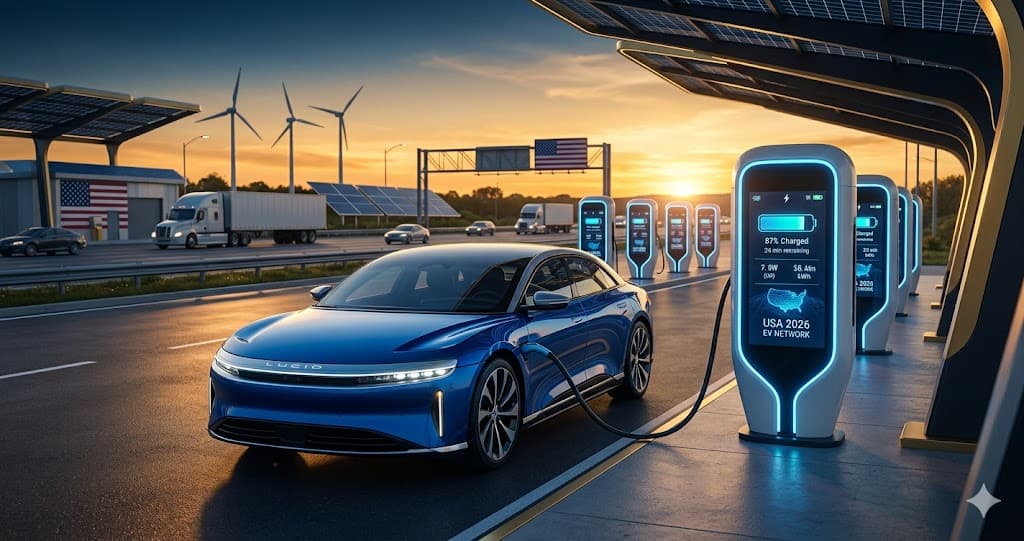
The Future Unplugged: EV Charging in USA by 2026
The landscape of the automobile electric car USA 2026 market is on the cusp of a profound transformation, particularly concerning its critical charging infrastructure. As electric vehicles transition from niche to mainstream, the demands for speed, accessibility, and integration are reshaping how and where drivers power up. This analysis delves into expert predictions and market trends, forecasting a future where charging is not just a necessity but a seamless, integrated part of the driving experience, driven by technological advancements and strategic investments across the United States.
The New Era of Charging Infrastructure
By 2026, the evolution of EV charging infrastructure in the USA will mark a significant departure from its nascent beginnings. No longer merely about the availability of charging points, the focus shifts dramatically towards optimizing power delivery, enhancing user convenience, and intelligently integrating charging solutions into daily life and long-distance travel. The emphasis is on making the act of charging as effortless and efficient as possible, moving beyond simple utility to a more sophisticated, user-centric system.
Beyond the Basics: Power and Convenience Redefined
The most striking development in the coming years will be the substantial increase in charging power and speed. Fast chargers, once a premium, are becoming the standard. EVgo’s recent launch of 28 new fast charging stalls in San Diego, each offering 200 kW, exemplifies this trend. This move is not an isolated incident but part of a broader strategy, with EVgo having installed over 1,200 new chargers last year alone. This indicates a clear industry pivot towards larger, more robust charging hubs capable of serving a greater volume of drivers quickly and efficiently. The days of waiting hours for a meaningful charge are rapidly fading.
For intercity travel, the predictions are even more ambitious. Tesla’s Superchargers, already recognized as a benchmark for fast charging, are set to evolve further. Plans are in motion for even faster chargers, ranging from 150 kW to a staggering 300 kW, strategically located in ‘robotic banks’ near clusters of restaurants and other services. This intelligent placement ensures that charging becomes a productive pause rather than a dreaded delay, allowing drivers to combine necessary stops with powering up their vehicles. The integration of charging with lifestyle activities is a cornerstone of future convenience, transforming a utility into an amenity.
Moreover, the horizon includes a very small number of super-fast chargers, capable of delivering 500 kW or more. While these ultra-high-power stations will likely be expensive to use, catering to those who cannot afford to time their charging with other activities, they represent the pinnacle of speed and convenience for compatible vehicles. This tiered approach to charging speed and cost will offer drivers unparalleled flexibility, allowing them to choose the option that best suits their needs and schedule.
Integrated Solutions: Hotels, Retail, and Road Trips Transformed
The integration of EV charging into various sectors of the economy is another critical trend for 2026. Hotels, in particular, are poised to play a pivotal role in supporting long-distance electric travel. For guests on road trips, the need for overnight charging far exceeds typical daily usage. Experts predict that hotel guests will require closer to 40-50 kWh per night, a significant increase from the 10 kWh often sufficient for local commuters. This demand necessitates higher power levels for hotel-based charging solutions, potentially leading to automated charging systems where a group of hotels in one location could even share a centralized, high-capacity station.
Daytime road trip stops will also see significant upgrades, requiring 50 kWh or more, which translates to 100 kW or greater fast charging capabilities. The strategic placement of Tesla’s Superchargers near restaurants, already a significant advantage, will become even more critical. These locations facilitate seamless lunch or dinner stops, allowing drivers to fully utilize their downtime for charging without incurring idle fees. The concept of ‘full station utilization during extended mealtimes’ suggests a future where charging networks are designed to maximize efficiency by aligning with driver behavior, offering special deals to encourage staggered stops and optimize charger availability.
Beyond hotels, retail locations are also stepping up. The plan for 8 new EV charging locations at ShopRite stores, bringing the total to over 50, highlights a growing trend of integrating charging into everyday shopping routines. This strategy offers convenience for local drivers and reinforces the idea that charging can be effortlessly woven into daily errands, making the transition to an electric vehicle even smoother for a broader consumer base. Motels near these restaurant and service clusters will also become key hubs, allowing cars to shuttle off, further expanding the ecosystem of convenient charging options.
The Interoperability Imperative: A Unified Charging Experience
A crucial enabler for widespread EV adoption is the increasing interoperability of charging infrastructure. By 2026, the majority of EVs on American roads will already be capable of utilizing advanced charging standards, largely due to Tesla’s significant market share. Beyond Tesla, similar abilities are rapidly being developed for other major players like Rivian and leading Chinese EV manufacturers such as Xpeng and BYD. This convergence towards universal charging compatibility is not merely a convenience; it’s a competitive necessity.
Suppliers are actively preparing to offer solutions that will make this ability standard in all new EVs by the early 2030s. This future vision suggests a landscape where proprietary charging networks become less restrictive, and drivers gain greater freedom to charge their vehicles at any compatible station, regardless of brand. This harmonization will significantly reduce range anxiety and simplify the ownership experience, a critical factor for driving mass adoption across the USA. The push for interoperability ensures that the expanding infrastructure benefits all electric car owners, not just those tied to specific brands.
Market Dynamics: Tesla’s Position and Broader Trends
While the charging infrastructure undergoes rapid expansion, the broader EV market itself is navigating evolving dynamics. Tesla, a dominant force, continues to shape the industry, but its growth trajectory and market position are subject to increasing scrutiny and competition.
Tesla’s Enduring Influence on Charging Amidst Evolving Sales
Despite a more competitive sales environment, Tesla’s Supercharger network is poised to maintain its status as a critical asset for the `automobile electric car USA 2026` market. Its reputation for reliability and speed, particularly for intercity trips, ensures it remains a benchmark. Even as other networks expand, Tesla’s established footprint and advanced technology continue to set a high bar for the industry. This leadership in charging infrastructure is likely to be a more consistent growth story for the company than its vehicle delivery figures alone.
However, it’s important to contextualize this within Tesla’s broader performance. While their charging infrastructure evolves, analyst consensus points to a more tempered outlook for vehicle deliveries. Projections for Q1 2026 are around 365,645 vehicles, with a full-year figure of approximately 1.69 million. This represents a modest 3.3% increase over 2025’s 1.64 million, and notably, a decline from the peak of 1.81 million in 2023. This suggests a maturing market where Tesla, while still a leader, faces intensified competition from traditional automakers and new entrants alike, impacting its rate of market share expansion.
A Maturing EV Market and Diversification Strategies
The cooling of analyst hopes for a significant Tesla recovery in 2026 underscores a broader trend: the EV market is maturing. The initial surge of early adopters has given way to a more discerning mainstream consumer base, demanding not just innovation but also affordability, reliability, and a robust support ecosystem. This shift means that while overall EV adoption continues to grow, the pace of growth for individual OEMs, even market leaders, may normalize.
In response to these market dynamics, Tesla’s energy storage (ESS) venture offers a more compelling growth narrative. Deployments reached 14.2 GWh in Q4 2025 and are expected to hit 65.2 GWh for the full year 2026. This consistent expansion in a segment where Tesla currently faces less competitive pressure highlights a strategic diversification. However, even in ESS, competition is emerging, with most US electric vehicle battery players pivoting production lines towards this sector, vying for the custom of data centers and other large-scale energy consumers. This indicates that while growth opportunities exist beyond vehicle sales, they too will eventually become more competitive.
Regional Leadership: California’s Blueprint for the Nation
California continues to serve as a bellwether for the `automobile electric car USA 2026` market and beyond. As the US state with the largest number of electric vehicles and the most public EV chargers, its developments often foreshadow national trends. The state’s commitment is evident in its legal requirement to run on 100% clean electricity by 2045, simultaneously electrifying cars and homes while facing surging demand from energy-hungry data centers. This ambitious goal profoundly impacts how EVs are charged.
The increasingly clean electricity grids in California, driven by the addition of more renewables, directly counter the misconception that electric vehicles “run on coal.” While some electricity still comes from fossil fuels, the trend is unequivocally towards cleaner sources. Furthermore, many homeowners with solar power are already charging their EVs with their own clean electricity, creating a localized, sustainable charging ecosystem. This commitment to clean energy not only makes EV ownership more environmentally friendly but also positions California as a living laboratory for sustainable transportation solutions that could be replicated nationwide.
The Consumer Experience: What Drivers Can Expect
For the average American driver considering or already owning an electric car, the evolving infrastructure promises a significantly improved experience by 2026. The future of EV charging is designed to minimize inconvenience and maximize value, transforming a potentially daunting task into a seamless part of daily life and travel.
Seamless Stops and Strategic Charging
The future of EV charging is defined by integration. Drivers can expect charging to become less of a separate chore and more intertwined with their existing routines. Imagine pulling into a robotic charging bank near your favorite restaurant for lunch, confident that your vehicle will be charged quickly and efficiently while you enjoy your meal. The absence of idle fees means you won’t be penalized for taking your time, and the full utilization of stations during peak meal times ensures that infrastructure is working optimally for everyone.
Restaurant partnerships offering special deals outside normal meal times will encourage drivers to stagger their stops, further optimizing charger availability and reducing wait times. This strategic approach turns charging into an opportunity to save money or enjoy a discount, rather than just an expense. Similarly, overnight stays at hotels will transform into opportunities for full, high-power charges, ensuring a fresh start for the next leg of a road trip. These thoughtful integrations will make EV ownership more attractive and less logistically challenging for the average consumer.
The Cost of Speed and the Value of Time
While convenience and speed are paramount, the market will also see a tiered pricing structure that reflects the value of time. Ultra-fast chargers (500 kW+) will undoubtedly come at a premium. This higher cost will be justified for those who absolutely cannot afford to wait, such as business travelers on tight schedules or those needing an immediate boost in a critical situation. However, for most drivers, the more common 150-300 kW fast chargers, strategically located near amenities, will offer an optimal balance of speed, convenience, and cost-effectiveness.
This means drivers will have the agency to choose their charging experience based on their immediate needs and budget. A leisurely meal might mean a slightly slower, more affordable charge, while a quick pit stop could justify a higher price for maximum speed. This flexibility empowers consumers and allows the market to cater to a diverse range of preferences, solidifying the economic viability of electric car ownership.
A Greener Charge: The Grid’s Evolution
One of the most significant future predictions revolves around the environmental impact of EV charging. As grids across the USA, particularly in leading states like California, continue to integrate more renewable energy sources, the act of charging an electric car becomes progressively greener. The narrative that EVs “run on coal” is increasingly outdated and fundamentally flawed, as electricity is generated from a diverse and rapidly cleaner mix of sources. The legal mandates for 100% clean electricity, as seen in California, underscore a national commitment to decarbonization that directly benefits EV owners.
This ongoing transition to cleaner grids means that with each passing year, the environmental footprint of driving an electric car diminishes. For homeowners with solar panels, the ability to charge their vehicles directly from their own clean, renewable energy source offers the ultimate in sustainable transportation. This combination of grid-level improvements and individual sustainable practices ensures that the `automobile electric car USA 2026` market is not just about personal mobility, but also about contributing to a cleaner, more sustainable future for the entire nation.
Challenges and Opportunities Ahead
While the future of EV charging in the USA appears bright with promises of speed, convenience, and integration, the path forward is not without its challenges and corresponding opportunities. Scaling up such a complex and critical infrastructure requires sustained effort, innovation, and strategic foresight.
Scaling Up and Maintaining Quality
The rapid expansion of charging infrastructure, as evidenced by EVgo’s aggressive deployment and Tesla’s continuous upgrades, presents a significant challenge in maintaining consistent quality and reliability. As the number of charging stalls grows into the tens of thousands and power levels increase, ensuring uptime, consistent performance, and user-friendly interfaces becomes paramount. Technical glitches, broken chargers, or slow speeds can severely undermine consumer confidence and hinder adoption. Therefore, a key opportunity lies in robust maintenance, proactive monitoring, and rapid response systems to ensure that the user experience remains positive and reliable across the expanding network.
The integration of robotic banks and automated charging solutions, while promising greater efficiency, also introduces new layers of technical complexity. Developing and deploying these advanced systems at scale, ensuring their security, and making them accessible to a diverse user base will require significant investment in R&D and skilled personnel. The success of these future-forward initiatives hinges not just on their innovative nature but on their practical, everyday reliability for millions of drivers.
The Race for Innovation and Competitive Edge
The evolving market dynamics, including a more competitive landscape for EV sales and the emergence of new players in energy storage, will fuel a continuous race for innovation. OEMs and charging providers will constantly seek new ways to differentiate themselves, whether through ultra-fast charging technologies, novel billing models, enhanced user interfaces, or seamless integration with vehicle navigation systems. This competitive environment is a tremendous opportunity for consumers, as it drives down costs, improves services, and accelerates technological advancements.
Innovations in battery technology, which allow vehicles to accept higher power levels more safely and efficiently, will directly influence the development of charging infrastructure. The synergy between vehicle design and charging capability will be crucial, pushing both sides of the ecosystem to evolve in lockstep. Companies that can anticipate these shifts and invest in future-proof solutions will gain a significant competitive edge in the `automobile electric car USA 2026` market and beyond.
Policy and Investment Drivers
Underpinning all these developments are critical policy decisions and ongoing investments. Government incentives, regulations promoting EV adoption, and funding for charging infrastructure are vital catalysts. The commitment to clean energy goals, such as California’s 2045 target, provides a clear long-term vision that encourages private sector investment. Continued public-private partnerships will be essential to bridge funding gaps, accelerate deployment in underserved areas, and ensure equitable access to charging.
The growth in Tesla’s energy storage business also highlights the broader investment landscape in clean energy. As grids become more reliant on intermittent renewables, robust energy storage solutions become indispensable. This segment, while not directly automobile sales, is intricately linked to the overall health and resilience of the electrical infrastructure that powers electric cars. Therefore, investments in energy storage will indirectly support the growth and reliability of EV charging networks, creating a virtuous cycle of sustainable energy development.
Conclusion
The outlook for the `automobile electric car USA 2026` market, particularly concerning its charging infrastructure, is one of profound transformation and strategic evolution. We are moving towards a future where charging is faster, more convenient, and deeply integrated into the fabric of daily life and travel. From high-power Superchargers strategically placed near amenities to hotel-based charging solutions and ubiquitous retail partnerships, the charging experience is being redefined to meet the needs of a rapidly growing electric fleet.
While Tesla continues to be a pivotal force, its market dynamics suggest a maturing landscape with increased competition, pushing all players towards greater innovation and efficiency. The commitment to cleaner energy grids, spearheaded by states like California, further enhances the environmental credentials of EV ownership. The challenges of scaling and maintaining quality are significant, but the opportunities for innovation, improved consumer experience, and a greener future are even greater. By 2026, the act of powering an electric car in the USA will be a testament to foresight, technological advancement, and a collective vision for sustainable mobility.